
How to get the natural look with injectables
What a natural result with injectables looks like, and how we get there.
Read

Answers to the questions we hear most about dermal fillers.
Published July 13, 2018
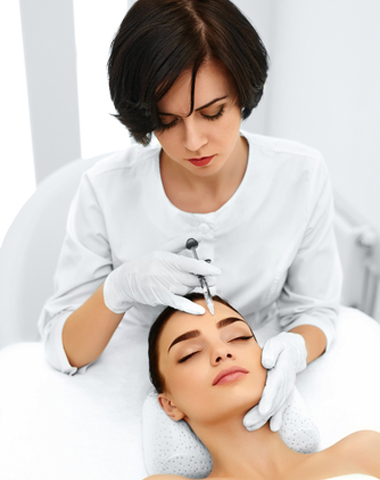
Dermal fillers, also known as injectables, are a go-to treatment to even out acne and chicken pox scars and to address aging concerns: deep creases, fine lines, wrinkles, eye hollows, thinning lips, and slackened cheeks and temples.
Here are the questions we hear most often about dermal fillers.
A dermal filler is a natural or synthetic material that’s injected into your skin to plump the area. Natural fillers use substances derived from humans or animals (hyaluronic acid is the most common), whereas synthetic fillers work with the muscles, making them semi-permanent.
Because dermal fillers come in so many varieties with different consistencies and results, your dermatologist will select the best product for your unique skin and concerns. All fillers are temporary, with some lasting longer than others depending on the type of filler and your skin’s absorption.
By nature, fillers fill: they’re injected into your skin’s trouble spots (hollows or wrinkles) to increase fullness and restore youthfulness. Today, they’re also used to sculpt the face to enhance and naturally alter your looks. From plumping your lips to non-surgical facelifts and nose jobs, dermal fillers can create symmetry, add volume, smooth out lines and creases, define jawlines and augment cheeks. They offer total rejuvenation.
Not only do fillers fill, but they boost collagen production, improve internal hydration, smooth texture and even out complexions.
We inject fillers into your skin using a fine needle, so while it doesn’t hurt too much, it is uncomfortable. Some areas, like your lips, can hurt more than others, but it also depends on individual pain tolerance and experience; everyone is different.
You have the option of applying an anesthetic cream before your treatment, and some fillers include lidocaine to reduce discomfort. The procedure takes only about 15 to 30 minutes (you can do it on your lunch break), so it’s over quickly.
Aside from a new fullness in previously hollow areas, your face shouldn’t feel different. For some, there’s a risk of lumpiness, but it’s often a result of bruising or swelling and will dissipate as you heal.
You can prevent lumpiness by preventing swelling and bruising: come early so you can ice the areas before your procedure, and be sure to ice afterwards. Let us know if you bruise easily or have had bruises in the injection areas, so we can be more careful or avoid the area.
Dermal fillers are temporary, lasting six to twelve months. If you’re really unhappy, they can also be reversed within 24 to 48 hours of injection with an enzyme that metabolizes the filler more quickly.
As you age, facial fat diminishes, leaving your skin sallow, gaunt and sagging. Where neuromodulators paralyze muscle movement to minimize and prevent forehead lines and crow’s feet, dermal fillers add volume and work particularly well around the mouth, cheeks and under the eyes. Since the two approach age-related skin issues differently, they are often used in tandem.
When an experienced dermatologist injects your dermal fillers, the risks are significantly reduced.
You want an ethical, educated and experienced professional consulting and performing your procedure to get the best results.
Redness, itchiness, tenderness, bruising and swelling are common side effects. You can reduce them by icing, avoiding smoking and exercise on the day of your procedure, and staying away from fish oil and anti-inflammatories.
The only real downside to dermal fillers is that they need to be maintained. Your body will eventually metabolize the filler, so follow-up appointments are crucial to maintaining your results.
What a natural result with injectables looks like, and how we get there.

What causes laugh and marionette lines, and how fillers can soften them.
How non-surgical treatments can lift and refresh the face.
Cosmetic consultations need no referral. For medical dermatology, ask your doctor to send us a referral and we will call you to book.
We reply within one business day. Please don't include health details. For a medical concern, ask your doctor for a referral.