All-Inclusive Laser Course
A comprehensive course in laser technology
- Price
- From $6,500
- Format
- Online theory and 8-day practicum
All-inclusive laser program
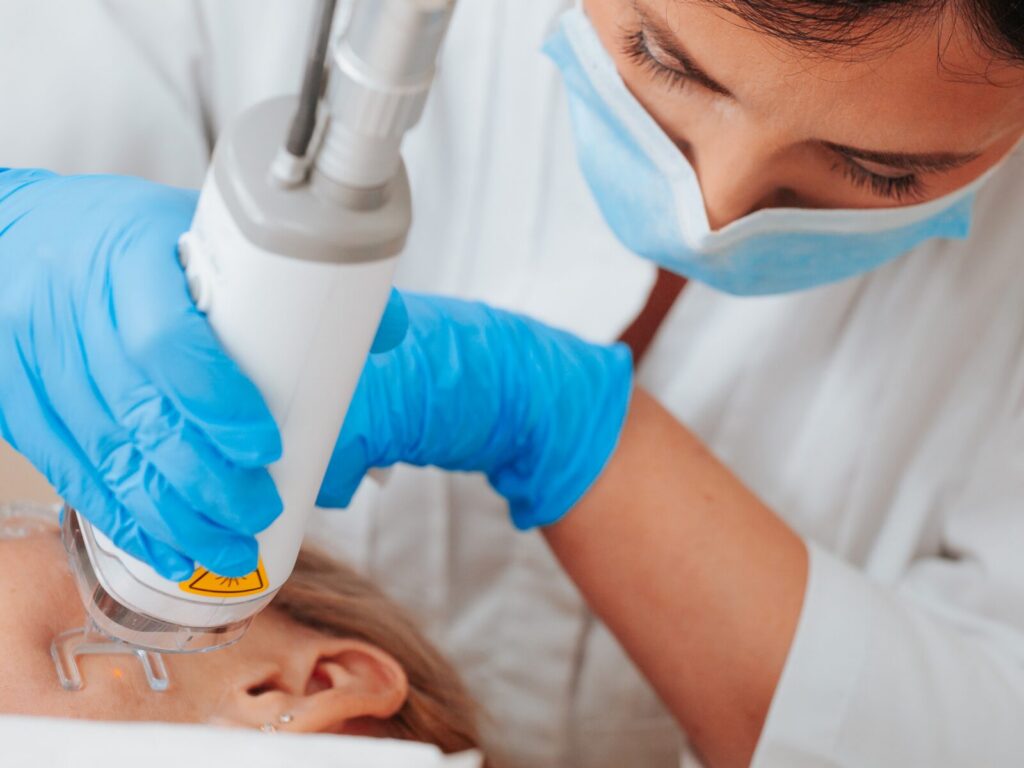
Welcome to our comprehensive All-inclusive Laser Technician program. Our training program
is designed to equip students with the knowledge and hands-on skills necessary to excel in the
growing field of cosmetic laser treatments. Below is an outline of the course structure and the
key topics covered.
- Recognized by the Medical Aesthetics and Laser Technology Council of Canada
- Accredited and EQA (Education Quality Assurance) Recognized by the Government
8-day training program: $6500
Hybrid model: online modules, plus in-class instruction and practical training.
Course outline
- Skin histology
- Laser physics
- Laser tissue interactions
- Laser parameters
- Types of lasers and devices and their uses
- IPL device
- Laser hair removal devices
- Resurfacing ablative and non-ablative devices
- Laser tattoo removal devices
- Diode device
- Vascular lasers devices
- Fitzpatrick skin types
- Treating darker skin types (Fitzpatrick IV to VI)
- Assessing and treating skin conditions with laser and light
- Contraindications
- Pre- and post-laser care
- Complications and wound care
- Laser safety
Skin histology
- Layers of the skin
- The epidermis and its components
- The dermis and its layers
- Hypodermis and deep fascia
- Melanocytes and skin pigmentation
Hair anatomy
- Structure and function of hair
- Hair growth cycles
Introduction
- What is a laser?
- Laser properties
- Electromagnetic spectrum
- Laser properties
- Laser wavelength
- Laser–tissue interaction
- Interaction of light and tissue
- Chromophore
- Selective photothermolysis
- Determining laser parameters
- Types of lasers and light technology
- Intense pulsed light
- Non-ablative lasers
- Non-ablative and ablative laser resurfacing
- Fractionated and full ablation
- Q-switched laser
- Pico laser
- LED
- Infrared
- Radio frequency
Skin analysis and patient care
- Skin type assessment
- Identifying skin condition
- Patient selection and contraindications
- Choosing the proper wavelength and parameters
- Test spots
- Explaining pre/post-treatment care
- Complications and wound care
Skin conditions
- Laser Hair removal• Facial rejuvenation
- Skin tightening
- Spider veins
- Rosacea and other vascular conditions
- Acne treatment by laser / IPL
- Acne scars
- Photodamage
- Hyperpigmentation
- Melasma
- Scarring of skin
- Tattoo removal
Client consultation and treatment planning
- Initial consultation process
- Pre-treatment guidelines
- Post-treatment care
Practical hands-on
- Laser and IPL hair removal
- Vascular/pigmented skin conditions
- Pigmented conditions, skin rejuvenation and scarring
- Ablative fractionated resurfacing
- Ablative resurfacing
- Non-ablative resurfacing
- Q-switched and picosecond lasers
- Non-invasive skin rejuvenation
- Tattoo removal
Laser safety
Our laser safety course is based on the CSA standards Z386.20 (safe use of lasers in healthcare) and taught by a board-certified committee member from the University of Alberta.
Prerequisites
High school diploma or equivalent (or approval from the instructor for non-graduates)
No prior experience in laser technology is required, although a background in beauty, healthcare, or aesthetics is helpful.
Certification
Upon successful completion of the course, students will receive a Cosmetic Laser Technician
Certification, accredited by the Medical Aesthetics and Laser Technology Council of Canada.
Prerequisites
- High school diploma
- 18 or older
Hands-on training
- Equipment includes : Class 4 laser and light devices.
- All models will be provided
- You will be trained on how to recognize common dermatological conditions: acne, acne scarring, moles, melasma, rosacea and hyperpigmentation.
Online modules
- Laser physics
- Laser tissue interactions
- Laser parameters
- Types of lasers and devices and their uses
- Fitzpatrick skin types
- Treating darker skin types (Fitzpatrick IV to VI)
- Assessing and treating skin conditions with laser and light
- Contraindications
- Pre- and post-laser care
- Complications and wound care
- Laser safety
Skin histology
- Layers of the skin
- The epidermis and its components
- The dermis and its layers
- Hypodermis and deep fascia
- Melanocytes and skin pigmentation
Hair anatomy
- Structure and function of hair
- Hair growth cycles
Introduction
- What is a laser
Laser properties
- Electromagnetic spectrum
- Laser properties
- Laser wavelength
Laser–tissue interaction
- Interaction of light and tissue
- Chromophore
- Selective photothermolysis
- Determining laser parameters
Types of lasers and light technology
- Intense pulsed light
- Non-ablative lasers
- Non-ablative and ablative laser resurfacing
- Fractionated and full ablation
- Q-switched laser
- Pico laser
Skin analysis and patient care
- Skin type assessment
- Identifying skin condition
- Patient selection and contraindications
- Choosing proper wavelength and parameters
- Test spots
- Explaining pre/post treatment care
- Complications and wound care
Skin conditions
- Laser hair removal
- Facial rejuvenation
- Skin tightening
- Spider veins
- Rosacea and other vascular conditions
- Acne treatment by laser / IPL
- Acne scars
- Photodamage
- Hyperpigmentation
- Melasma
- Scarring of skin
- Tattoo removal
Upcoming dates
Contact us for upcoming course dates.
Enquire about a course
Tell us which course interests you and we will reply with upcoming dates, pricing and prerequisites.